 Membership Card Protocol
Let anyone from your community
Create tools for your community
Anywhere on the internet
The Membership Card Protocol is a secure way for communities to share resources and build trust.
It lets non-technical community leaders hand out digital cards that can be used to prove membership and access resources.
 Waterfront Salsa Society
 LGBT Center Youth Group
 Neighborhood Mutual Aid Network
 Gospel Choir
 Tech Workers for Climate Action
Easily create shared resources anywhere on the internet
- Give community members a card. Anything your community makes can check for it.
- No accounts, no passwords, no complex API integrations, no single sign on, no central membership database.
- Free to use and open source.
- Works across the internet, not inside one platform.
- Private and secure by default.
- Anyone in the community can set up shared resources without relying on a central administrator.
With membership cards, you can have...
 A calendar anyone can post to
 Private docs and project management
 A members-only Minecraft server
 A voting system
 A community ridesharing board
 A secure community filestore
 A community skillshare directory
 A free stuff board
....without having to do it all on one platform.
Securely build trust across communities
- Your members can show cards to others to prove their affiliation. For example, someone from Dallas Street Medics could reach out to someone from Austin Mutual Aid and attach their card to prove that they are worthy of trust.
- Cards can be updated, annotated and revoked, so showing a card demonstrates that someone is a member in good standing.
- In most cases, revealing a card reveals nothing else about you. A card could prove that someone is, say, an employee at a large technology company without revealing their name or any other identifying information.
- Cards can be used to send secure messages and create invite-only chatrooms. For example, an employee of an LGBT center could easily create a chatroom that only employees from other LGBT centers in the region can enter.
How It Works
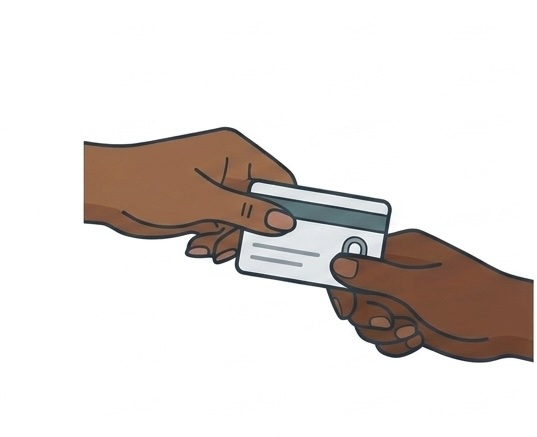 Issue cards to members of your community
- Verify that you own your community's domain name (or verify some other way).
- Design your card and decide what to call it.
- Create a link that lets your members claim a card.
- When they click the link, they'll be able to add the card to a virtual wallet.
- If you like, you can create different cards for different roles in your community.
 Set up open source tools that use cards to grant entry
- Select from a menu of open source tools that might be helpful to your community. (Most of these are still being built.)
- Tell the tools to accept cards from your community.
- Invite members of your community to come check it out.
- Like to vibe code or have a community member who does? Building your own tools and integrating cards is easy.
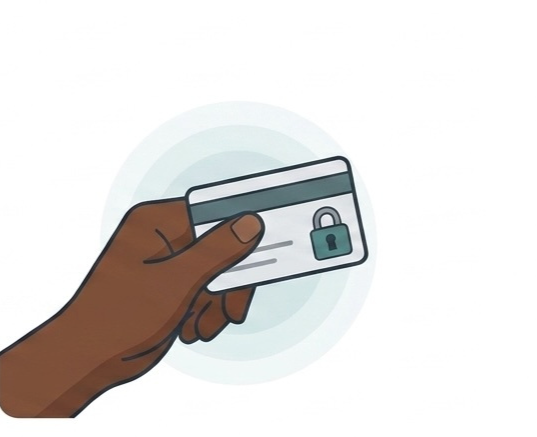 Members present their cards to access resources or prove their affiliation to others
- When a member clicks on a community resource it will bring up their card wallet. They'll drag the appropriate card from their wallet to the service to gain entry.
- They can also attach their cards to private messages, create chatrooms for people with specific cards, and (soon) attach cards to Bluesky messages to prove their affiliation.

Care about community? We'd love your help.
The membership card protocol has been an open source labor of love for Relationality Lab and the community surrounding it. We have outlined the protocol and deployed the infrastructure to make it a reality, but it still needs to undergo rigorous third party auditing and we still need community partners with which to test it. We are holding off on building the front-end application that people will use to manage their cards until we have these community partnerships in place.
Status of the Membership Card Protocol- Design of core protocol — done
- Partial review by cybersecurity professionals — done
- System for storing cards without a centralized database — done
- System for associating cards with domain names, so it's easy to see which group cards come from — done
- System of "presses" for easily creating and updating cards — done
- Zero-knowledge backups of cards in case a device is lost — done
- Card verification plug-in that can be added to any website or application — done
- Cards can send and receive messages, so that people can share a card without also sharing an email or phone # — done
- Chat rooms that require cards for entry and kick members out if cards are revoked — done
- "Relay" system to keep cardholder activity obfuscated from the people who run card infrastructure — done
- SDKs for building web and mobile applications that use cards — done
- Partnerships with real-world communities — not yet done
- Frontend application for creating, updating, and managing cards — not yet done
- Thorough review by cybersecurity and trust and safety professionals — not yet done
- Integration with an ecosystem of community applications — not yet done
Get involved
We're excited to partner with people with the following backgrounds:
Thanks! We'll be in touch.